

Published
- Risk
- Trends
Swedish defence exports surge as global demand rises
Rising geopolitical tensions and growing defence budgets are driving Swedish security and defence exports to record levels. The trend is clearly reflected at EKN, where defence has become the largest sector in its guarantee portfolio. For many buyers, attractive long-term financing backed by Sweden’s triple-A credit rating is an important part of the equation.
At a glance
At a glance
- Swedish defence exports remain at record levels, reaching just over SEK 28 billion in 2025, driven by rising geopolitical tensions and increased global defence spending.
- Defence is now EKN’s largest sector, accounting for around 40 per cent of the total guarantee portfolio, with several major transactions in the pipeline.
- Long-term, triple-A backed financing solutions from EKN and SEK make large and complex defence contracts more attractive and predictable for international buyers.
- Sweden’s defence industry includes around 380 companies, with approximately 80 active exporters of advanced systems such as aircraft, naval vessels, munitions and surveillance technology.
- Strong government support and strict export controls – including the 2025 Defence Industry Strategy and oversight by the ISP – reinforce competitiveness, transparency and compliance with international commitments.
Growing defence exports supported by long-term financing solutions
Sweden ranks among the world’s largest arms exporters per capita, thanks to a long tradition of independent defence production. In 2025, Swedish defence exports reached just over SEK 28 billion, compared to a record SEK 29 billion in 2024.
The United States was the largest destination during the year, receiving grenade launchers and tracked vehicles, with sales of fighter jets to Hungary and Brazil in second and third place. The strong export performance is also reflected at EKN, where the defence sector grew to become the single largest industry in the guarantee portfolio in 2025, accounting for around 40 percent of total exposure.
A growing number of new applications, combined with several major transactions currently in the pipeline, suggest that the sector will continue to increase in importance for EKN. The nature of defence contracts also contributes to this development.
“Defence contracts often come with long delivery schedules because of the complexity of the products as well as long repayment periods due to the significant amounts,” says Oscar Sundström, Senior Underwriter at EKN. “One example is the sale of fighter jets to Brazil in 2014, valued at SEK 39 billion.”
Long-term financing supports major defence contracts
Although defence purchases are typically financed through national budgets, export credit solutions can play an important role in facilitating large and long-term transactions.
ECA-backed financing supported by EKN’s highest possible credit standing and complemented by funding from SEK, itself highly rated, creates an attractive financing structure for buyers.
“Long tenors at a fixed CIRR interest rate offered by SEK, combined with triple-A cover from EKN, create a highly attractive financing solution,” Sundström explains.
“The amortisation schedule provides predictability, as future repayments are known in advance. In many cases the financing terms are more favourable than what some countries could obtain on the capital markets themselves.”
The structure can also be tailored to match the commercial terms of a specific transaction, making it easier for buyers to plan large defence investments.
A growing ecosystem of Swedish defence companies
Sweden’s defence industry has long been recognised for its technological excellence. Today, the sector comprises an ecosystem of around 380 companies.
Approximately 80 of these companies export advanced defence systems, ranging from munitions and combat vehicles to naval systems, surveillance technology and specialised software.
To further reinforce the sector, the Swedish government adopted a new Defence Industry Strategy in 2025, setting out a long-term framework to enhance competitiveness and strengthen Sweden’s overall defence capability.
Dual-use innovation creates new opportunities
A growing trend in the sector is the development of dual-use technologies – products that can be used for both civilian and military purposes. This trend opens the door for startups and smaller technology companies that need access to larger markets before they can achieve commercial scale.
The high-level decision-making involved in defence procurement also highlights the role of Team Sweden, which includes EKN, SEK, Business Sweden and Swedish embassies around the world.
“To buyers, the involvement of Team Sweden and the commitment of the Swedish government add integrity, transparency and long-term cooperation to the transaction,” says Sundström.
Sweden also maintains a strict export control framework. The Inspectorate of Strategic Products (ISP) oversees exports of military equipment and dual-use items, ensuring that recipients comply with Sweden’s obligations under international law and its human rights commitments.
Small-scale weapons production in Sweden dates back to the country’s era as a major military power in the 17th century, when manufacturing centred mainly on muskets and cannons. It was not until the 20th century that the sector expanded significantly, driven by rapid industrialisation and ongoing security concerns, both before and throughout the Cold War. Maintaining a domestic defence industry became an important part of Sweden’s comprehensive total defence strategy. Over time, well-known companies such as Bofors (today part of BAE Systems) and Saab emerged, producing a wide range of equipment including aircraft, naval vessels, artillery and radar systems.
Top 10 destinations for Swedish defence exports 2025
| Country | Value in MSEK | Products | |
|---|---|---|---|
| 1. | USA | 4,260 | Grenade launchers, tracked vehicles |
| 2. | Hungary | 2,499 | Fighter jets |
| 3. | Brazil | 2,195 | Fighter jets |
| 4. | Czech Republic | 2,123 | Leasing of fighter jets |
| 5. | United Arab Emirates | 1,603 | Airborne radar systems |
| 6. | Netherlands | 1,576 | Armoured vehicles |
| 7. | Germany | 1,490 | Missile systems |
| 8. | Poland | 1,464 | Ground combat systems, sea vessels |
| 9. | France | 1,149 | Missile and ground combat systems |
| 10. | India | 1,044 | Grenade launchers and ammunition |
Source: ISP
Related content
- Financing
- Trends
“Involving EKN adds value to our offering”
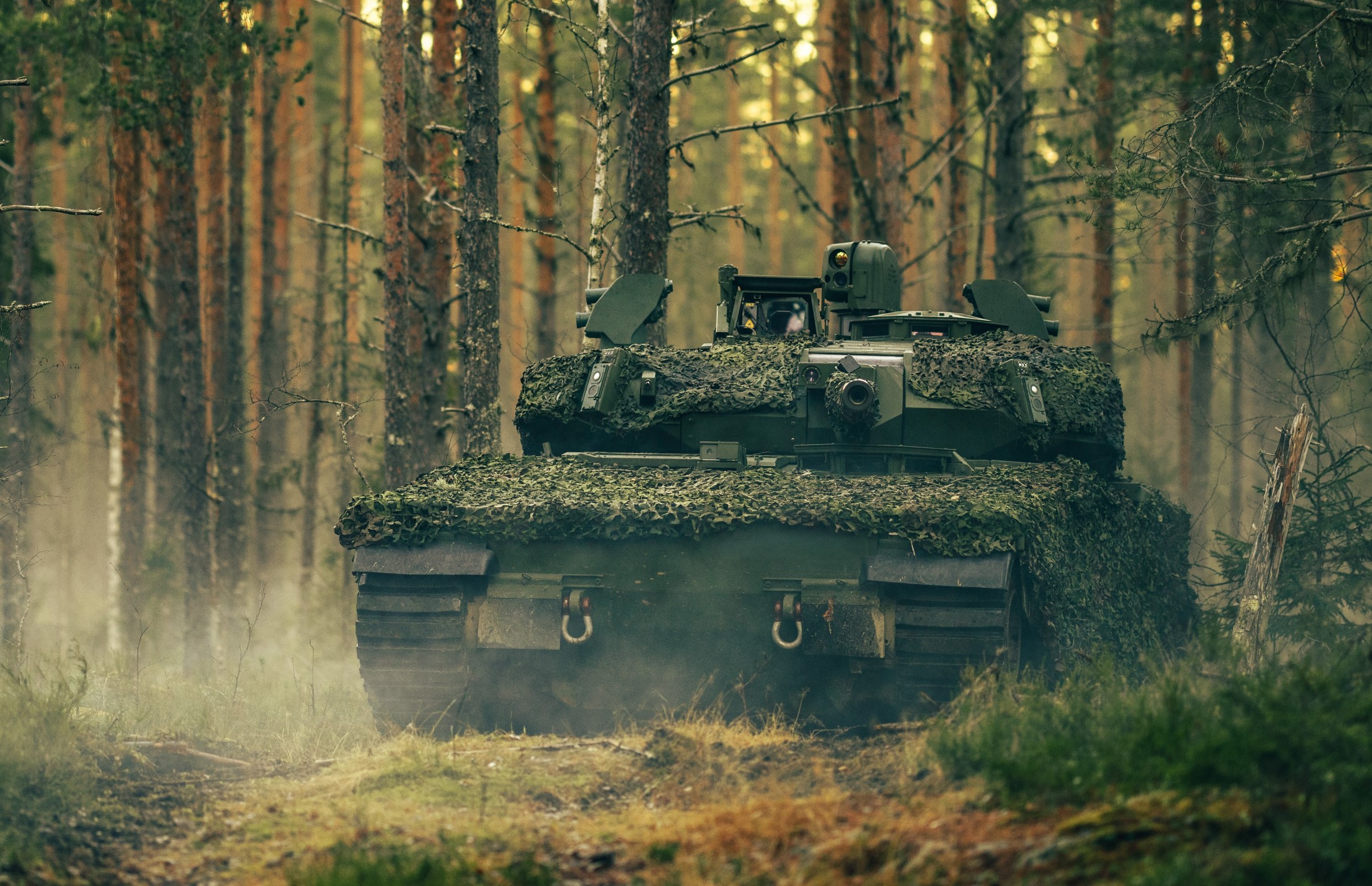
Swedish combat vehicles from BAE Systems Hägglunds are a global success. EKN boosts competitiveness with attractive financing.
“Involving EKN adds value to our offering”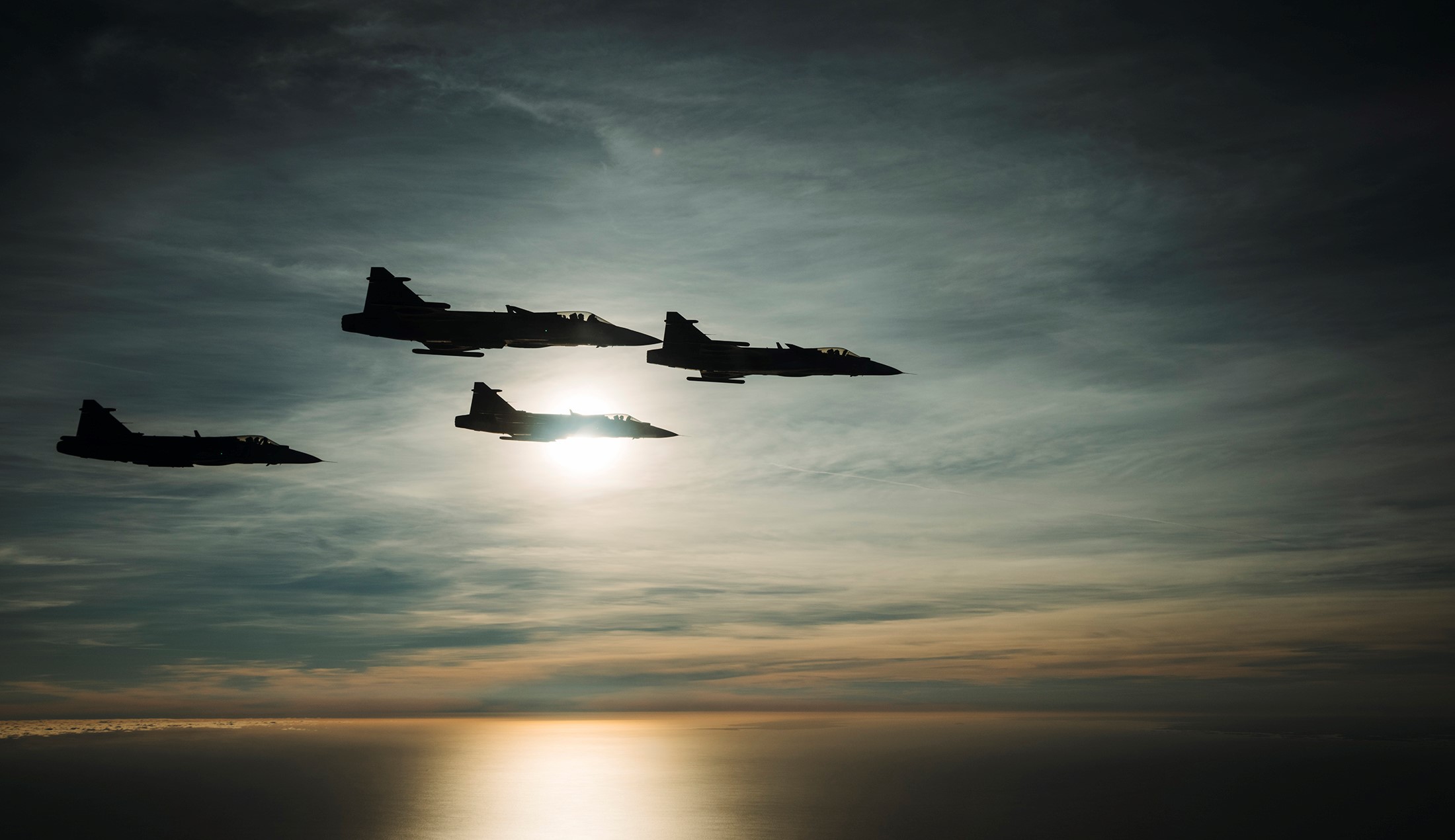
- Risk
- Trends
- Trade
Export finance poised to play a bigger role in European rearmament
State-backed guarantees are becoming a key tool in funding the bill for reinforcing European defence capabilities.
Export finance poised to play a bigger role in European rearmament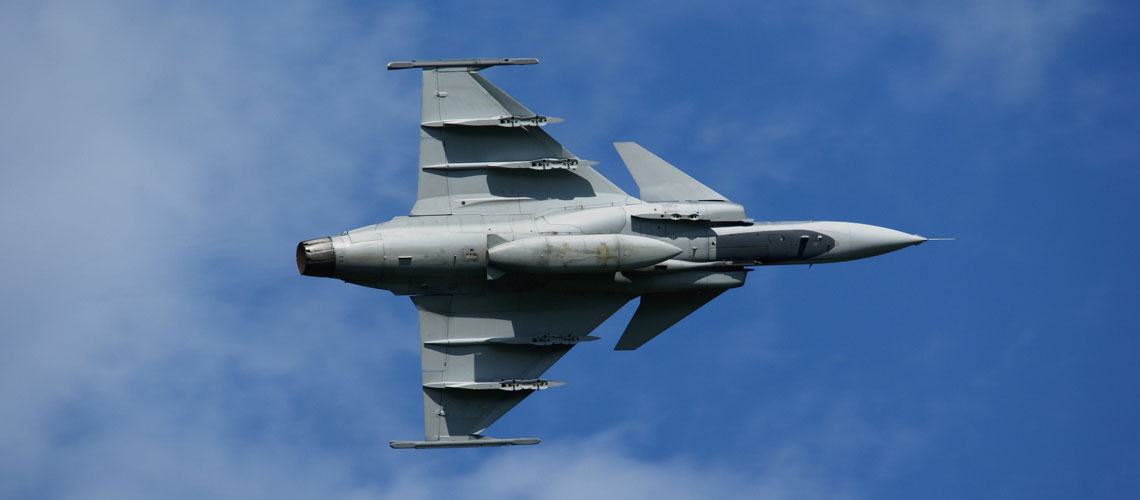
- Financing
- Guarantees
- Trends
In defence of defence
As defence spending rises across Europe, export finance plays a growing role in funding long-term security investments.
In defence of defence
EKN for buyers in Swedish export transactions
Buy from Sweden and benefit from attractive financing.
EKN for buyers in Swedish export transactions
EKN for large corporates
More and bigger export transactions for companies with an annual turnover of more than SEK five billion.
EKN for large corporates