

Published
- Financing
- Export support
- Tech
How Swedish mining solutions are scaling globally
Developing breakthrough technology is only the first step. Scaling it globally requires trusted reference projects, close collaboration and long-term financing. Sweden’s mining ecosystem shows that innovation must also be proven, scalable and bankable.
In brief
The article in brief
- Swedish mines provide reference projects where new technologies can be tested, refined and validated before international deployment.
- Lars Bergkvist, Global Business Development Manager at Epiroc, explains why proven technology helps customers make investment decisions.
- Collaboration between mining companies, technology suppliers and partners such as Ericsson is advancing automation, 5G connectivity and AI.
- Responsible mining, digital traceability and low-carbon production are becoming increasingly important competitive advantages.
- Export finance helps bridge the gap between innovation and implementation by enabling long-term investment in technology-intensive mining projects.
How Swedish mining solutions are scaling globally
From innovation to investment
Investing in unproven technology can carry operational risk for mining companies. Production interruptions are costly, and few operators want to become the industry’s guinea pig.
That is precisely why Sweden’s mining ecosystem has become such a valuable springboard for international exports.
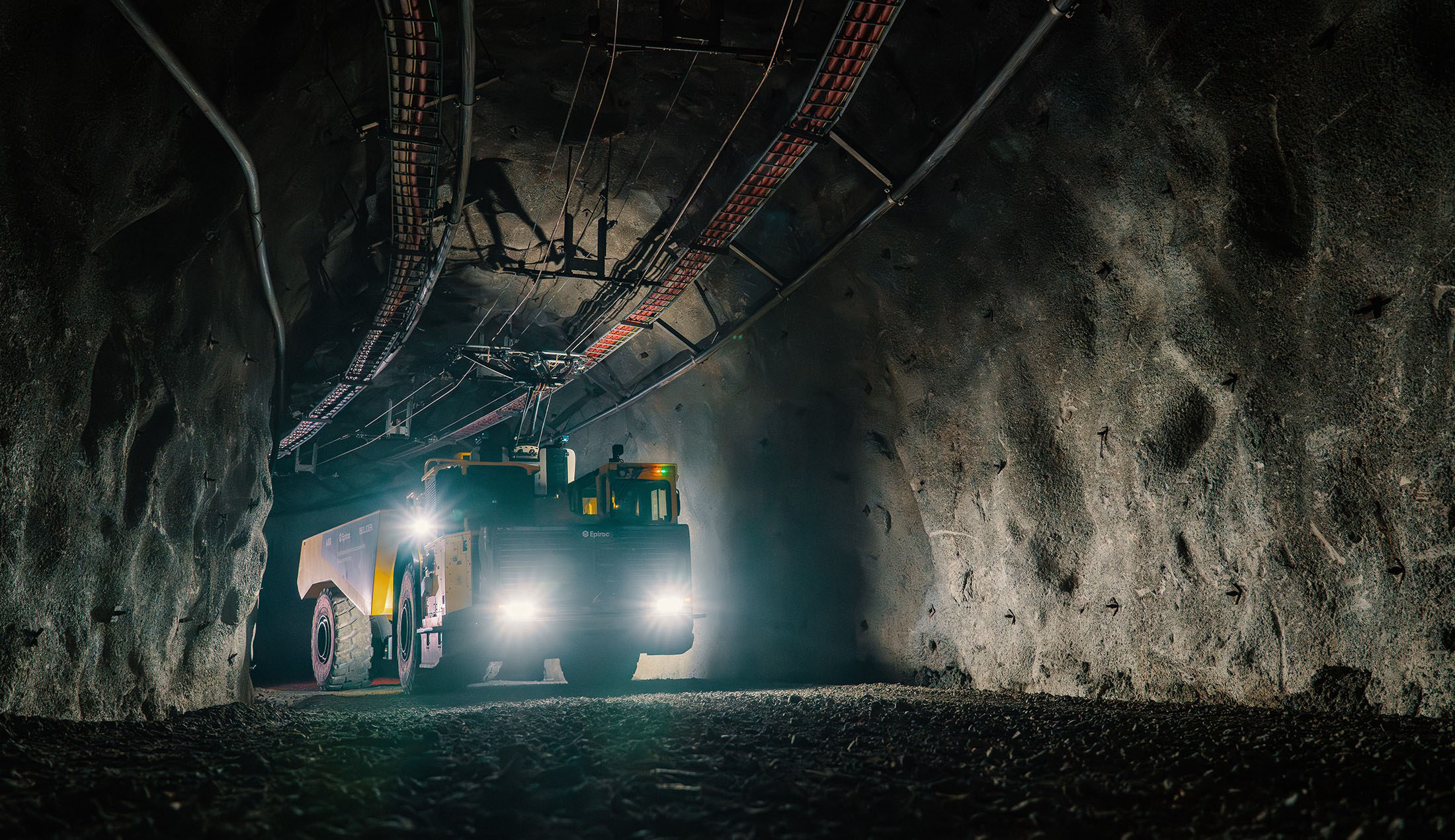
“Mining companies want to be early adopters ─ but they rarely want to be the first adopters,” says Lars Bergkvist, Global Business Development Manager at Epiroc.
“Reference projects are therefore incredibly important. Once technology has been successfully demonstrated in an operating mine like Boliden’s, it becomes much easier for customers around the world to make investment decisions.”
For Swedish suppliers, domestic mines do far more than produce metals. They provide living laboratories where new technologies can be developed, tested, refined and validated under real operating conditions before being deployed internationally.
That significantly lowers technology risk, not only for mining companies, but also for the banks financing large-scale projects.
Scaling innovation remains the next challenge
Sweden consistently ranks among the world’s most innovative countries. Yet commercialising innovation at scale remains a challenge.
“Ten years ago, mining companies often asked us for technologies that didn’t yet exist,” says Bergkvist.
“Today, the situation has almost reversed. Technology is developing faster than many customers can absorb it.”
The challenge is no longer inventing solutions.
It is integrating them into large, complex mining operations while managing organisational change, workforce training and investment cycles. Remote operations require new skills, new operating models and close collaboration between mine operators, equipment suppliers, software developers and financiers.
Sweden’s collaborative culture has become a competitive advantage.
Mining companies, technology suppliers, universities and public agencies have developed a model where innovation is shared, tested and continuously improved together.
Connectivity becomes critical infrastructure
Digital infrastructure is becoming as essential as roads, railways and power supply as mines become increasingly automated.
Autonomous vehicles, drilling rigs, ventilation systems and remote-control centres all depend on continuous, high-capacity communications.
Ericsson and Epiroc cooperate by integrating Ericsson’s 5G network technologies with Epiroc’s mining equipment and digital solutions to bring advanced 5G connectivity to underground mines. This partnership enables secure, high-performance private cellular networks tailored for the challenging underground environment.
Fifth-generation mobile networks, cloud computing and edge processing now enable operators to monitor entire mining operations in real time, optimise production flows and predict equipment failures before they occur.
Artificial intelligence is accelerating that transformation further. By combining operational data with machine learning, mining companies can optimise energy consumption, maintenance schedules, ore recovery and production planning.
The mine of the future will not simply be electrified. It will be intelligent.
Responsible mining is becoming a competitive advantage
Customers increasingly want to know where metals originate, how they were produced and the carbon footprint associated with every tonne delivered.
Digital traceability and transparent reporting are therefore becoming integral parts of future mining projects.
For producers able to document low-carbon extraction and responsible sourcing, that transparency may increasingly translate into commercial value.
As manufacturers seek to decarbonise their supply chains, responsibly produced minerals are likely to increase in importance.
Sweden’s combination of fossil-free electricity, advanced digitalisation and high environmental standards places its mining sector in a particularly strong position.
Finance is becoming a strategic enabler
Technology alone, however, will not transform the mining industry.
Deploying autonomous fleets, electrified transport systems and integrated digital platforms requires substantial long-term investment. For many mining companies – particularly in emerging markets – access to financing becomes just as decisive as access to technology.
This is where export credit agencies can help bridge the gap between innovation and implementation. Export credit guarantees enable commercial banks to finance larger projects over longer tenors. That benefits mining operators seeking modern technology as much as the Swedish companies supplying it.
As mining projects become larger, more integrated and increasingly technology-intensive, financing is evolving from a supporting function into a strategic component of successful project delivery.
Sweden’s moment
The transformation now under way reaches far beyond mining. Electrification, automation, artificial intelligence and digital connectivity are reshaping entire industrial value chains.
From mining companies willing to test tomorrow’s technologies, to world-leading equipment manufacturers, telecommunications providers, software developers and export financiers, Sweden has assembled one of the world’s most complete industrial ecosystems for the future of mining.
The world’s growing appetite for critical minerals ensures that demand for smarter, safer and more sustainable mining will only continue to increase.
For international banks, that represents a new generation of financeable assets. For mining companies, it offers a pathway towards greater productivity, lower emissions and improved resilience.
And for Swedish exporters, it presents a rare opportunity to help define how the next generation of mines will be built.
As the industry ventures deeper underground, Sweden’s mining cluster is demonstrating that the future of mining is not simply about extracting more minerals.
It is about extracting them more intelligently.
Related content
- Financing
- Export support
- Tech
From deep underground to global markets
The global race for critical minerals is no longer just about finding new deposits. It is about extracting them safely, efficiently and sustainably.
From deep underground to global markets
- Financing
- Digital
Montenegro’s 5G leap: how Swedish export finance is helping Mtel meet a tourism-driven data surge
Tourism is pushing Montenegro’s networks to the limit — now Swedish-backed 5G investment is stepping in to meet demand.
Montenegro’s 5G leap: how Swedish export finance is helping Mtel meet a tourism-driven data surge
- Sustainability
- Financing
Mining the future: How Sweden's Epiroc enables the green transition
Swedish mining tech is driving the green transition—backed by innovation and long-term finance.
Mining the future: How Sweden's Epiroc enables the green transition
EKN's guarantees
EKN's guarantees reduce the risk of payment defaults and help banks support businesses. Which guarantee suits your needs?
EKN's guarantees
EKN for buyers in Swedish export transactions
Buy from Sweden and benefit from attractive financing.
EKN for buyers in Swedish export transactions